

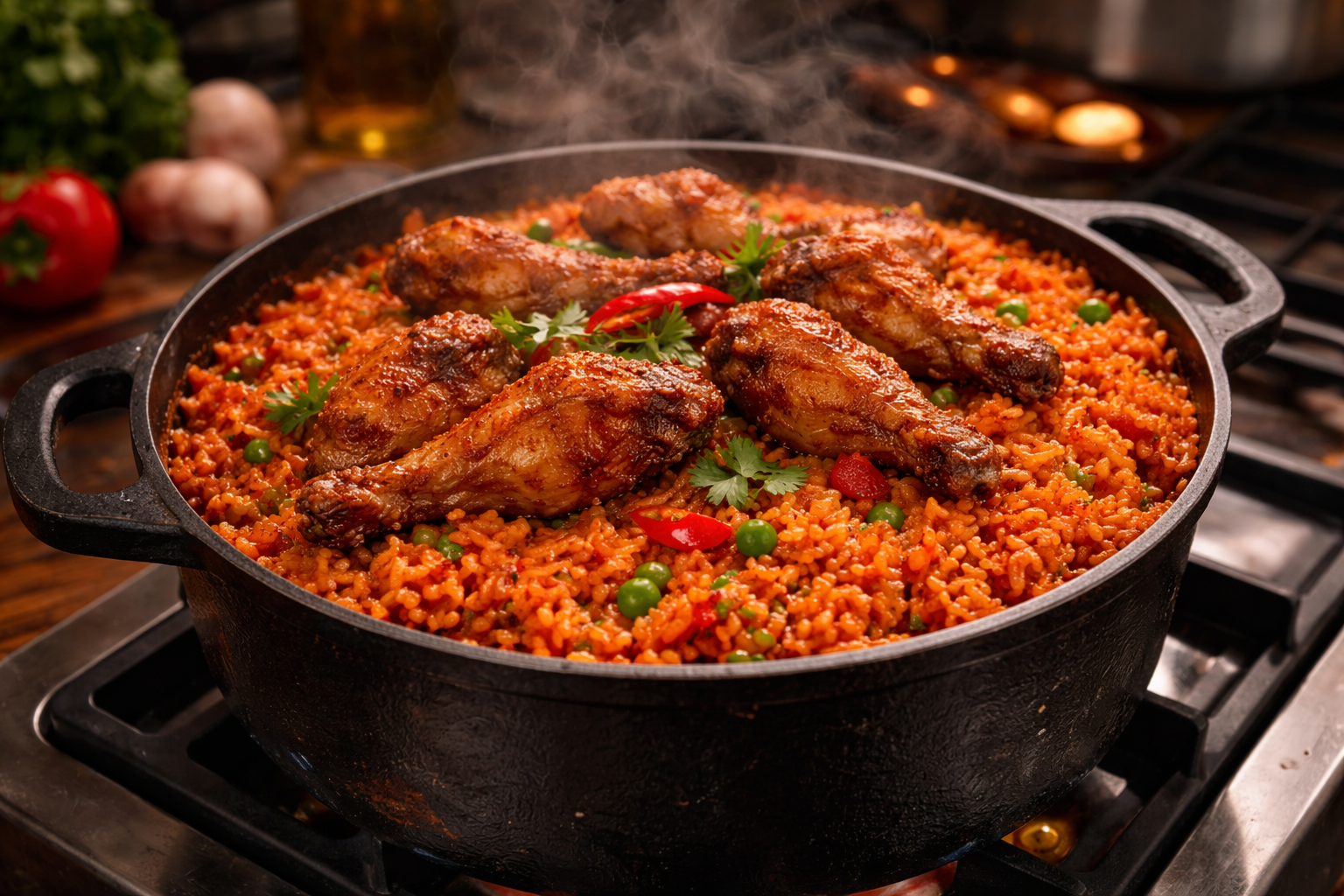
Cooking authentic Ghanaian jollof rice is not about rushing. It is about building flavor in stages and allowing each ingredient to contribute fully to the final dish. The rich color, deep aroma, and balanced taste that define Ghanaian jollof rice come from careful preparation of the stew base, proper seasoning, and controlled cooking of the food.
If you follow the correct steps patiently, you will produce jollof rice that is deeply flavorful, well-colored, and properly textured.
Step 1: Prepare and Roast the Tomato and Pepper Mix
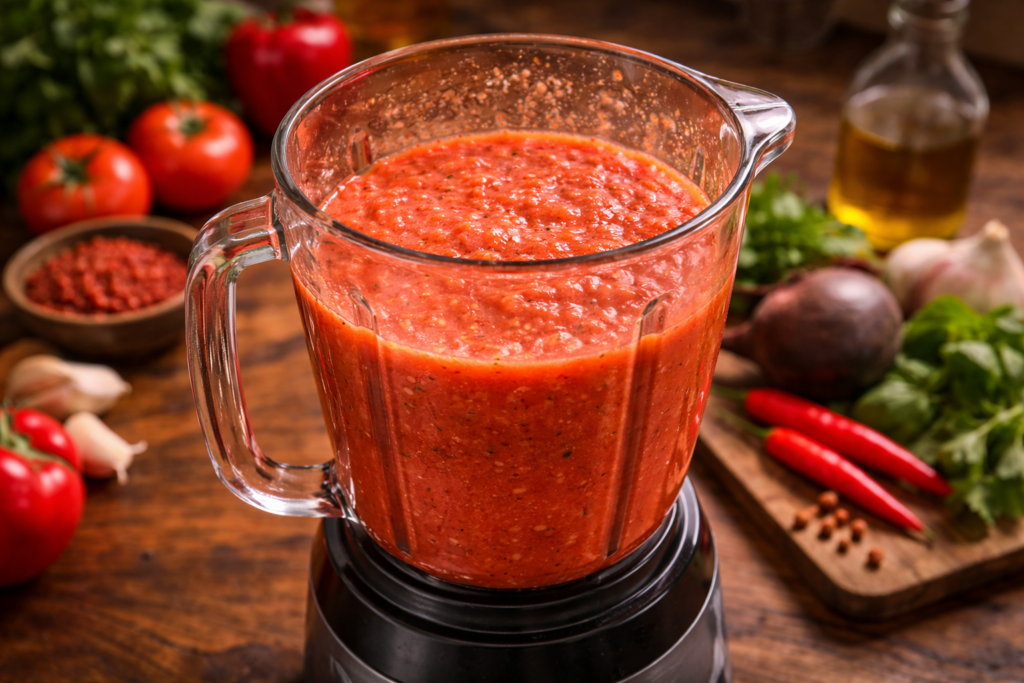
The first stage is preparing the tomato blend, which forms the foundation of the stew. Use fresh red tomatoes, red bell peppers, chilies, and optional vegetables like carrots. Adding herbs such as basil or coriander improves depth of flavor.
Roasting the tomatoes and peppers before blending is highly recommended because it enhances the flavor and adds a subtle smoky richness. Place the tomatoes and peppers in an oven or grill until slightly charred. This process concentrates their natural sweetness and removes excess moisture.
After roasting, blend the mixture until smooth. This becomes your tomato base.
Step 2: Prepare the Stew Base Blend
Next, prepare a second blend that strengthens the stew. Combine onions, garlic, ginger, bell peppers, herbs, and bay leaf. Blend these ingredients with a small amount of oil and water until smooth.
This mixture serves two purposes. It strengthens the stew and can also be used to season your meat. Using it as a base ensures the flavors remain consistent throughout the dish.
Step 3: Season and Cook Your Protein to Create Stock
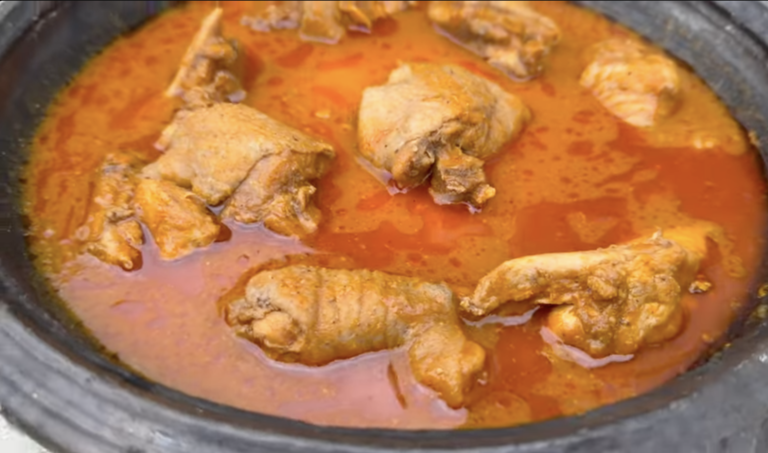
Season your preferred protein, such as goat meat, chicken, or beef, using part of the blended base mixture, seasoning cubes, and water. Cook the meat until tender and reserve the stock.
This stock is essential because authentic Ghanaian jollof rice cooks with stock, not plain water. The stock carries seasoning and strengthens the final flavor of the rice.
You may fry the cooked meat afterward if desired, but the stock must be preserved.
Step 4: Fry the Stew Base Properly
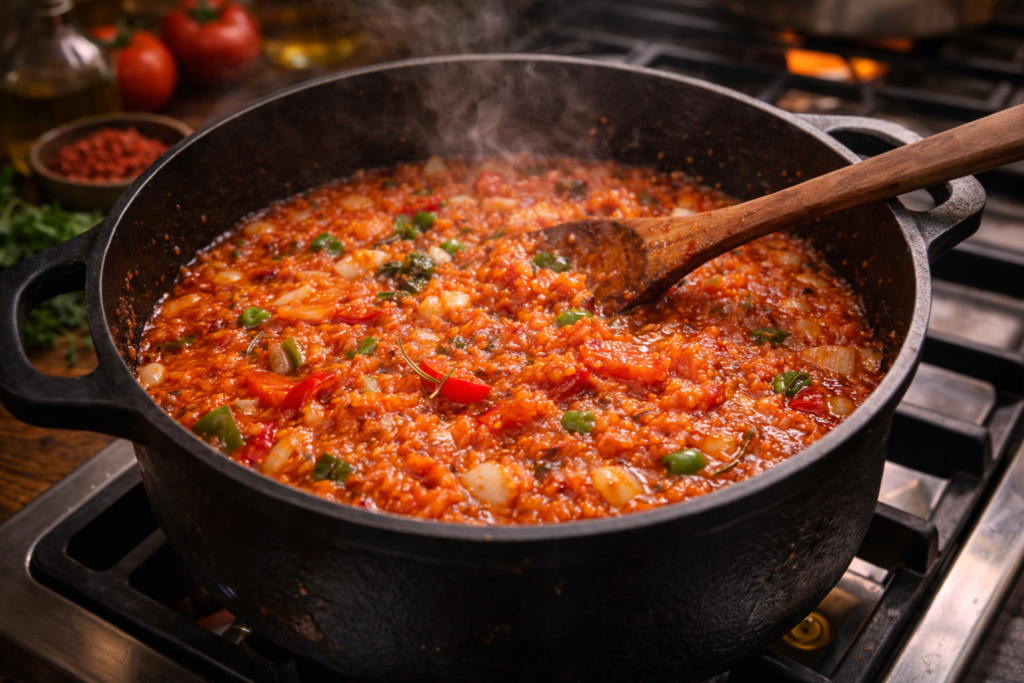
Heat oil in a large pot. Ghanaian jollof rice requires adequate oil to fry the stew properly and develop flavor.
Add chopped onions and fry until softened and slightly golden. Then add the blended stew base mixture and fry thoroughly. Frying at this stage is critical because it removes raw flavors and allows the ingredients to develop depth.
Next, add tomato paste and fry it well. Frying the tomato paste removes sourness and strengthens the color of the stew.
Once properly fried, add the blended tomato mixture and stir. Allow the stew to cook and reduce. This stage determines the richness of the final jollof rice.
Step 5: Season the Stew Properly
Add your spices carefully. Common spices include seasoning cubes, smoked paprika, and other balanced seasonings. Smoked paprika is especially important because it enhances both color and flavor.
The goal is to build flavor gradually. The stew should smell rich and well-developed before adding the rice.
Allow the stew to cook until the oil begins to rise slightly to the surface. This indicates that the stew is properly fried and ready.
Step 6: Add the Rice and Mix Properly
Wash your rice thoroughly and add it directly into the stew. Stir carefully to ensure the rice is evenly coated with the stew.
Do not add excessive liquid. Add only enough stock to support cooking. Authentic Ghanaian jollof rice cooks primarily through steam, not boiling water.
The balance between rice and stew must be correct. Too much rice weakens the flavor. Too little stew reduces richness.
Step 7: Allow the Rice to Cook with Steam
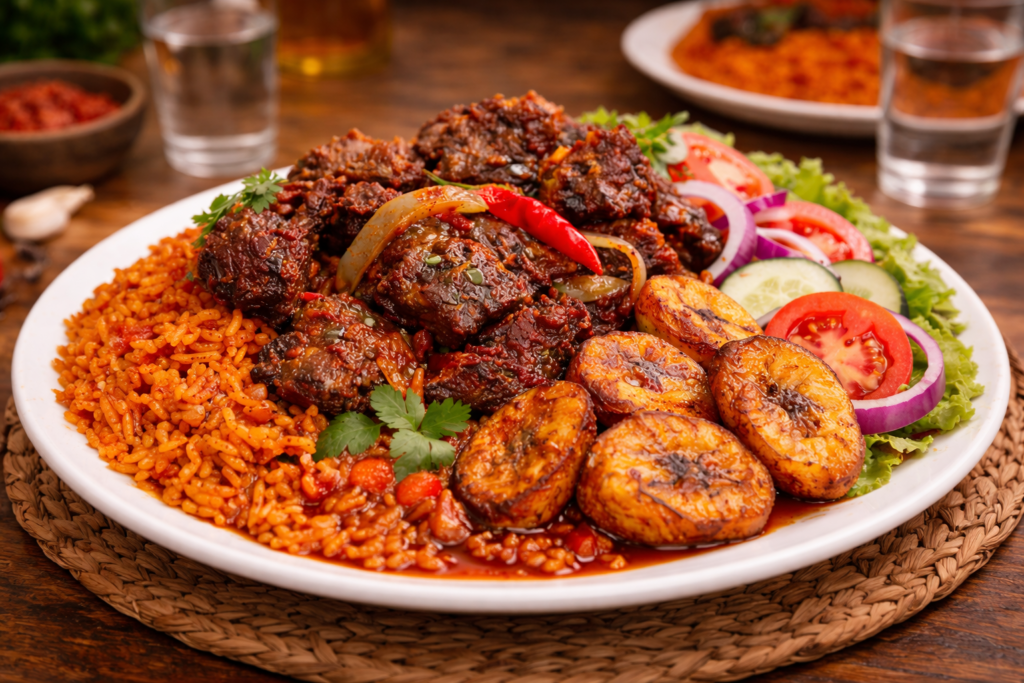
Cover the pot tightly and allow the rice to cook slowly on low to medium heat. Avoid stirring frequently. Stirring too often breaks the rice grains and affects texture.
Allow the rice to absorb the stew and stock gradually. This process ensures each grain carries flavor.
Check occasionally, but do not disturb unnecessarily.
Step 8: Add Optional Butter, Vegetables, and Protein
Once the rice is nearly fully cooked, you may add butter for additional richness and vegetables if desired.
Finally, add your cooked or fried meat. This completes the dish and integrates all flavors.
Allow it to cook for a few more minutes to finish steaming.
The Key to Authentic Ghanaian Jollof Rice
The most important factor in cooking authentic Ghanaian jollof rice is patience. Each stage, from roasting the tomatoes to frying the stew and steaming the rice, contributes to the final quality.
When done properly, the rice will have a rich red color, deep aroma, and balanced flavor. The grains will remain separate while fully infused with seasoning.
This is what makes authentic Ghanaian jollof rice stand out.