

Few foods carry the level of pride, debate, and emotional attachment that jollof rice does in West Africa. Over the years, conversations on social media, in homes, and even among celebrities have turned Ghanaian jollof rice into more than just a meal. It has become a cultural symbol. While different countries prepare jollof rice in their own way, Ghanaian jollof rice stands out because of its depth of flavor, its preparation process, and the intentional balance between spices and ingredients.
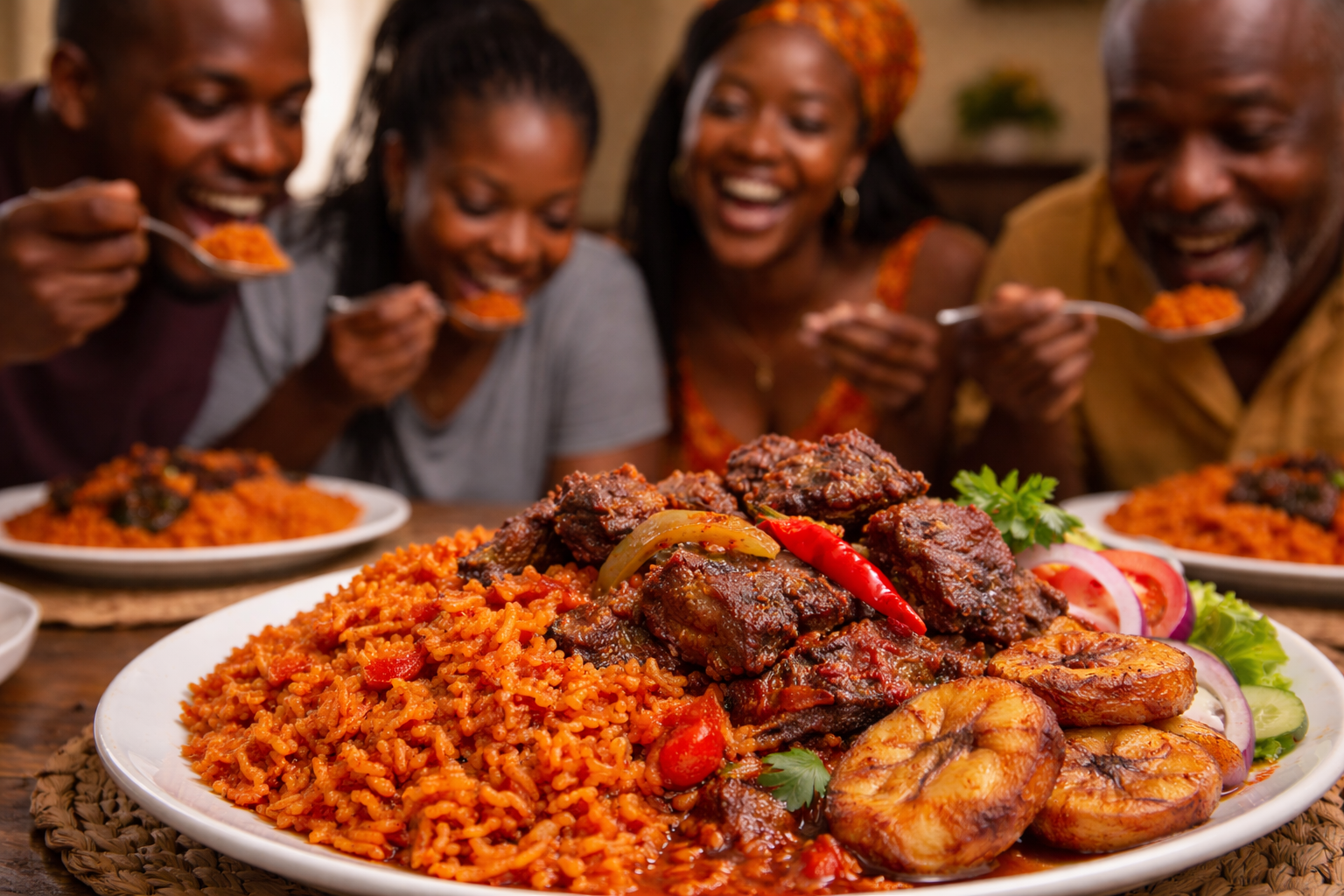
The difference is noticeable before the first bite. The rich red color, the aroma rising from the pot, and the texture of the grains all signal that careful work has been done. Ghanaian jollof rice is not the result of simply mixing rice and stew. It is the result of building flavor gradually and allowing each stage of the cooking process to contribute meaningfully to the final dish.
The Balance Between Spices and Ingredients
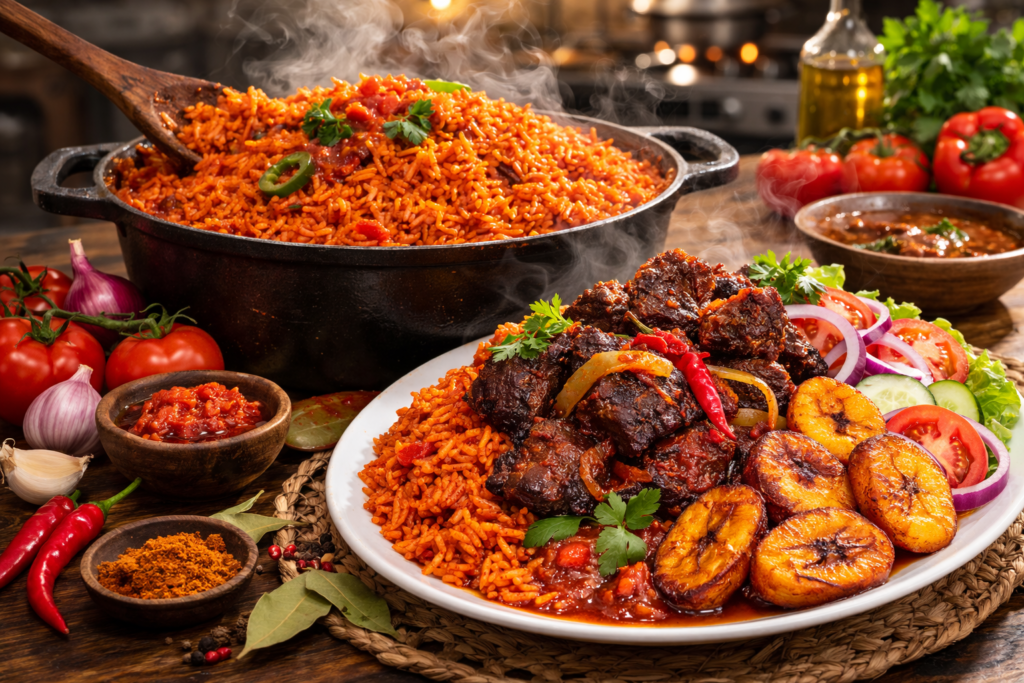
One of the defining characteristics of Ghanaian jollof rice is balance. The spices enhance the ingredients without overwhelming them, and the ingredients support the spices without diluting their presence. This harmony is achieved through careful measurement, proper timing, and patience during cooking. When prepared correctly, no single flavor dominates. Instead, the rice carries a unified taste that reflects the combination of tomatoes, peppers, herbs, stock, and seasoning working together.
This balance is also visible in the appearance of the rice. Ghanaian jollof rice has a deep, confident color that reflects proper frying of the stew base and adequate flavor concentration. The grains remain separate yet infused, rather than clumped or pale. These visual cues alone communicate the quality of preparation.
The Importance of Building a Proper Stew Base
The foundation of Ghanaian jollof rice is the stew. The quality of this stew determines the final outcome of the rice. A well-prepared stew requires fresh ingredients such as tomatoes, bell peppers, onions, garlic, ginger, and herbs. These ingredients are often roasted or fried to develop deeper flavor before being blended and cooked further.
Chef Abby, a respected Ghanaian culinary voice, explains the importance of this stage clearly:
“Every jollof needs a good stew, and every good stew needs a good base.”
This base is not rushed. Frying the tomato paste and blended pepper mixture allows the flavors to concentrate and removes unwanted sourness. This process also creates the distinctive richness that Ghanaian jollof rice is known for. Skipping or shortening this stage results in weaker flavor and less satisfying rice.
Cooking With Stock and Steam Instead of Excess Water
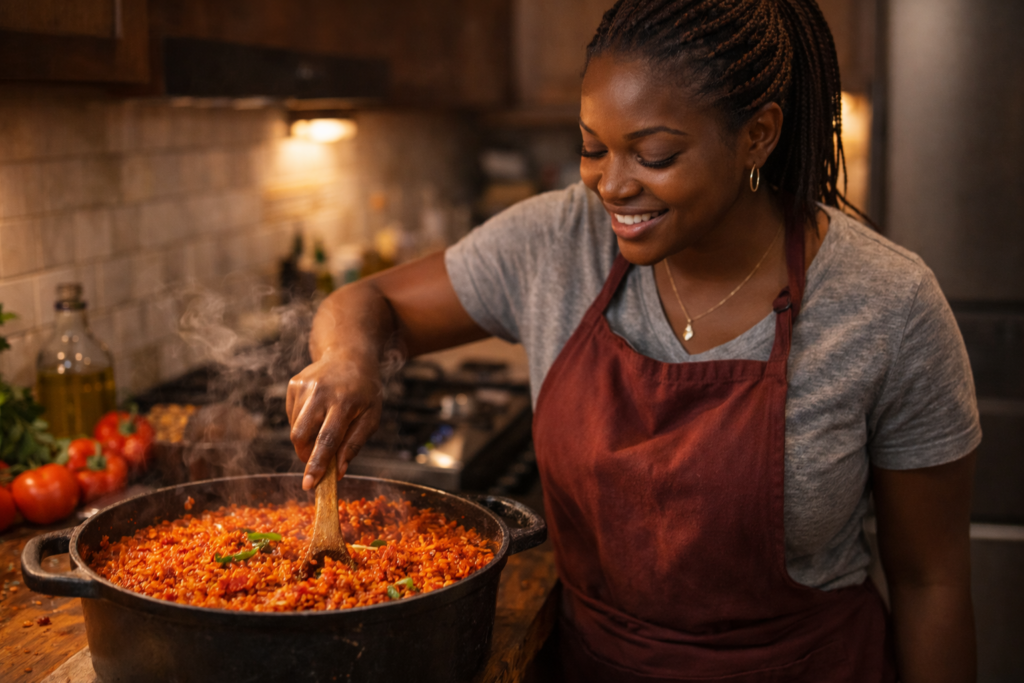
Another factor that makes Ghanaian jollof rice taste different is the use of stock rather than plain water. The stock, often made from seasoned meat or poultry, adds additional layers of flavor that water cannot provide. This allows the rice to absorb both the stew and the seasoning as it cooks.
Proper Ghanaian jollof rice is also cooked with controlled moisture. Too much water dilutes the flavor and affects the texture of the rice. When the rice cooks gradually in the stew and stock, it absorbs the flavor evenly and develops the firm, rich texture associated with authentic Ghanaian jollof rice.
This is why experienced cooks pay attention to proportions and avoid rushing the process. The rice is allowed to cook steadily, giving the ingredients time to blend fully.
The Emotional and Cultural Connection to Ghanaian Jollof Rice
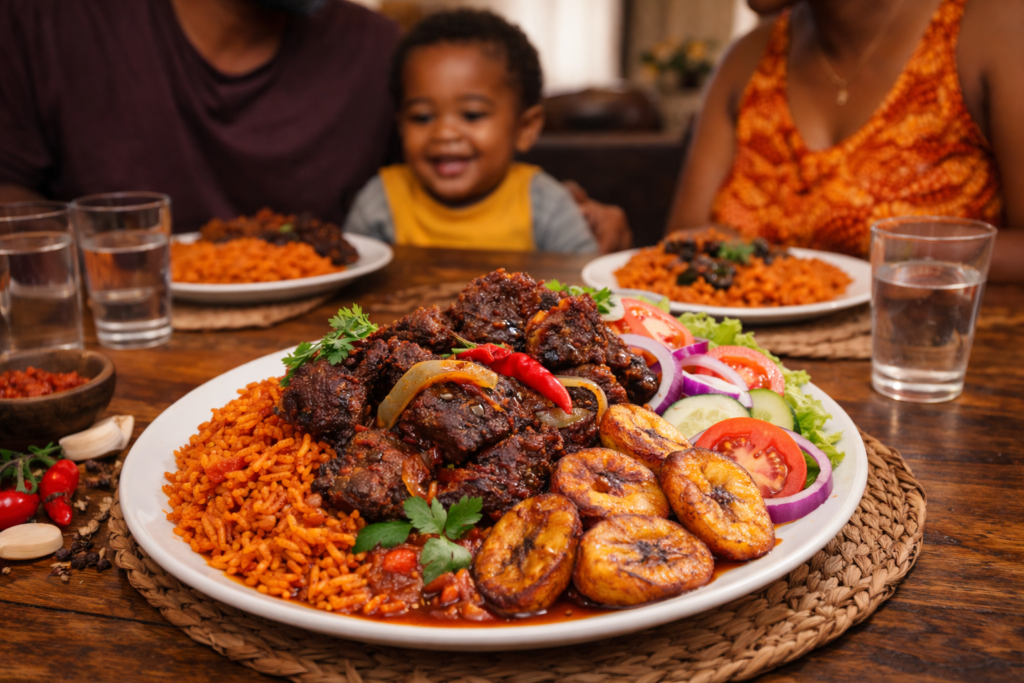
Beyond technique, Ghanaian jollof rice carries emotional meaning for many families. It is often prepared during gatherings, celebrations, and important family moments. The care invested in preparing it reflects the value placed on sharing meals and creating experiences around food.
I have personally seen how Ghanaian jollof rice affects people. Whenever I prepare it for my husband, his reaction reminds me that this dish goes beyond satisfying hunger. He recognizes the effort behind it, the patience required, and the attention given to every stage of preparation. Friends, family members, and even my in-laws have responded in the same way. They notice the difference immediately because properly prepared Ghanaian jollof rice carries a richness that cannot be achieved through shortcuts.
These reactions are not accidental. They are the natural result of respecting the process and understanding that every step contributes to the final outcome.
Why Ghanaian Jollof Rice Continues to Stand Out Globally
The global popularity of Ghanaian jollof rice is rooted in its consistency and quality. People who taste it recognize the depth of flavor and the care involved in its preparation. The roasting, frying, seasoning, and gradual cooking process all work together to produce a dish that feels complete and intentional.
Ghanaian jollof rice represents a disciplined approach to cooking. It reflects patience, skill, and attention to detail. These qualities ensure that the final result delivers not only strong flavor but also a memorable experience.
For many people, the difference is clear from the first taste. Ghanaian jollof rice does not rely on excess seasoning or shortcuts. It relies on process, balance, and respect for the craft of cooking. That is what makes it distinct, and that is why it continues to be loved both in Ghana and around the world.