


When I read the news, I needed to come here and talk about this quickly.
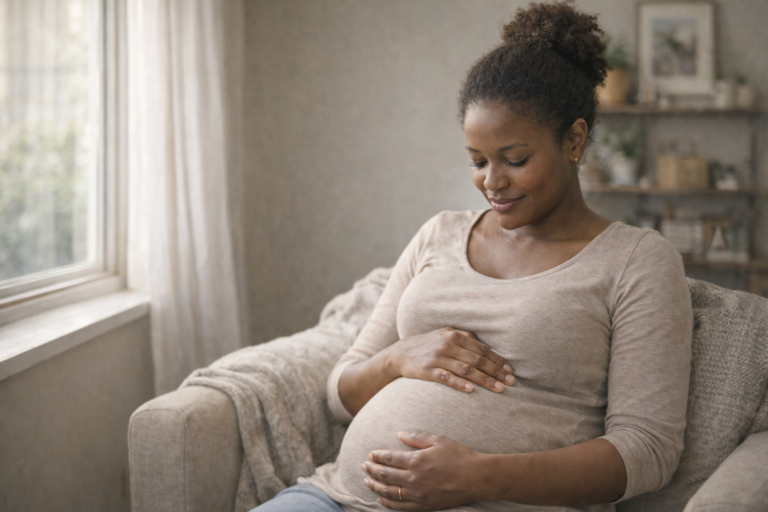
I was reading a recent report on MyJoyOnline, and all I could think about was a woman in Accra worrying about a problem she might not even have. A woman lying awake at night, replaying conversations, wondering what she did wrong. A woman blaming herself for something she doesn’t fully understand.
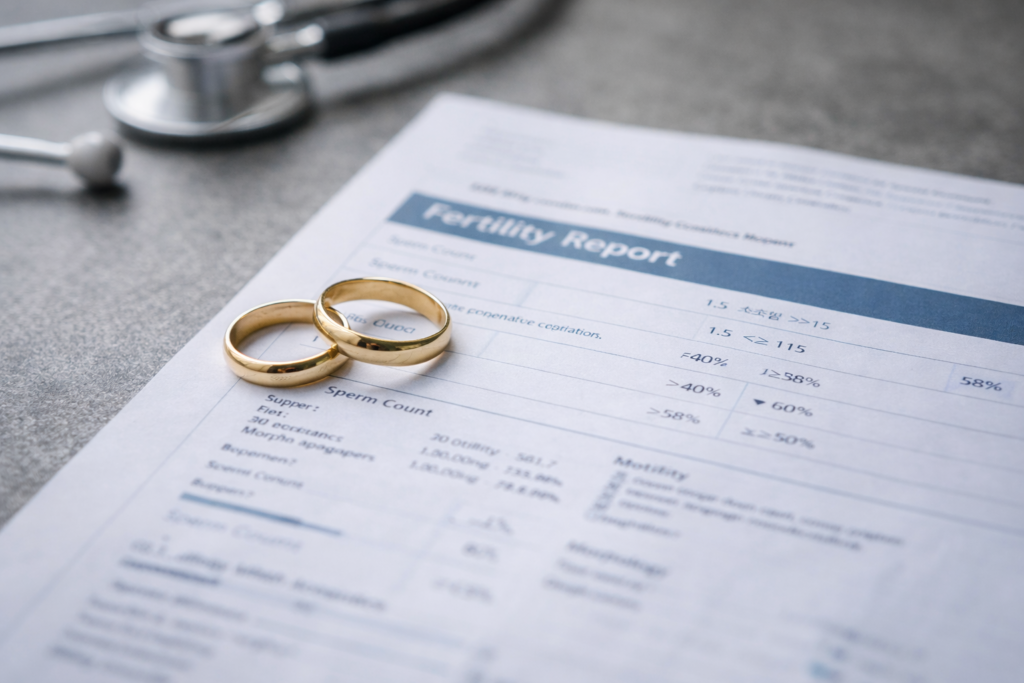
The research, shared by Dr Promise Sefogah, revealed that male infertility in Ghana accounts for a 70% percentage of couples struggling with childbirth, especially among those seeking fertility treatment in Accra. And yet, when pregnancy delays, society does not pause to process this information. It reacts the same way it always has—by turning its attention to the woman.
This is why this conversation matters. Because facts have changed, but attitudes have not.
How Women Carry the Weight of Male Infertility in Ghana
In many Ghanaian homes, the moment a woman gets married, the countdown begins. Family members start watching. Friends start asking questions. Church members start “praying.” Before long, concern quietly turns into suspicion.
If a woman does not get pregnant shortly after marriage, she is labelled. She is advised. She is compared. Sometimes, she is mocked. The assumption is automatic: something must be wrong with her.
What rarely happens is a suggestion that the man should be tested, too.
This is how women end up trying everything: medical, spiritual, traditional—often at great personal cost.

- They drink herbal mixtures they don’t understand.
- They submit themselves to prayers that feel more like interrogations.
- They accept blame because society has taught them that infertility is a woman’s burden.
But male infertility in Ghana is real, and ignoring it does not make it disappear. It only redirects the damage.
When Desperation Meets Exploitation
One of the most painful stories I have heard recently is about a woman who had been married for about ten years without a child.
- Ten years of hope.
- Ten years of waiting.
- Ten years of questions she could not answer.
Her desperation led her to a self-acclaimed man of God who told her that the solution to her problem was to bring her used sanitary pad. She did. And beyond that, the man slept with her under the guise of spiritual intervention.
Today, there is still no child. Her menstrual cycle has not stopped, and her health has deteriorated. She is brokenhearted. And now she and her husband are spending countless amounts of money trying to fix a situation that may never have required this level of suffering.
This is what happens when women are pressured into silence and blame. This is what happens when male infertility in Ghana is ignored. Women become vulnerable: not just emotionally, but physically and spiritually.
And yet, it is hard to judge her. When society makes motherhood the measure of a woman’s worth, desperation becomes understandable.
Why Couples Must Get Checked Together

This is why medical testing should not be a private burden carried by women alone.
If you are planning to get married, go for routine medical and fertility checks together. Not to assign blame. Not to threaten the relationship. But to begin your journey informed.
If you discover that the challenge lies with the woman or with the man, and you still choose each other, that choice is yours. Love does not suddenly become invalid because of a medical report.
Staying together despite fertility challenges does not make a couple weak. It makes them intentional.
Marriage is not only about children. Children are a blessing, yes—but marriage is also about companionship, respect, shared values, and building a life together. It is better to stay in the known than to live in fear and assumptions.
Changing the Narrative Around Male Infertility in Ghana
We need to change how we talk about infertility in this country.
- We need to stop assuming that delayed childbirth automatically means a woman has failed.
- We need to start normalising conversations around male infertility in Ghana.
- We need to encourage men to seek medical advice without shame or ridicule.
Most importantly, we need to protect women from blame, from exploitation, and from unnecessary suffering.
Knowledge does not destroy marriages. Silence does.
No woman deserves to suffer for a problem she may never have had. And no couple deserves to walk this journey without truth, compassion, and support.